Showing posts with label Resume. Show all posts

Monday, April 22, 2013

Resume Writing (Marie Webb)


How to Write a Great Resume
Marie Larsen  |  June 24, 2011  |   inShare
Learning to write an effective resume is a life skill most people cannot afford to ignore.
According to the U.S. Bureau of Labor Statistics, the median tenure for most professionals is about 4 years. For employees between the ages of 25 and 34, the median tenure is only 2.9 years.
Since most of us will change jobs a number of times in our career, we need to become proficient at selling ourselves and writing an effective resume.
Consider this: According to Career Builders’ Resume 2007 survey, on average, hiring managers receive 50 resumes for each and every job opening. Due to the sheer number of applicants, many managers skim and sort the resumes into “no go,” “maybe,” and “looks promising” piles.
Only resumes that are well-organized, easy-to-read, and specifically targeted to the position survive the cut.
Assuming a candidate has the relevant job experience, professional resume writers know what it takes to keep resumes in the “maybe” or “looks promising” piles. Here are the ten strategies resume professionals use for writing great resumes- and you can too.
How to Write a Great Resume
1. Resumes that make a good first impression emphasize specific accomplishments. Did you increase sales by 40%? Manage a team that introduced a profitable new product? Create and implement a money or time-saving process? Use specific examples to highlight your accomplishments.
2. Just as you would highlight your strongest points in an interview, do so in your resume. Put your strongest achievements and qualifications at the top of your resume.
3. Use a highlights section to catch the hiring manager’s attention.
4. Include only relevant job experience. If your resume is padded, most hiring managers will assume you aren’t qualified for the job.
5. Don’t try to be all things to all people. What are your top 3 skills? Focus on those.
6. Read the job description carefully. Note the keywords and use them to focus your resume.
7. Use an eye-catching, easy-to-read format. Include headings, bold print and bullets.
8. Write a different resume for each job skill/position. Resumes are definitely not one-size-fits-all.
9. To paraphrase JFK – tell not what the company can do for you, tell what you can do for the company.
10. Finally, proof and double-proof your resume. Given the competition, just one or two typos may eliminate a candidate from consideration.
We’ve all heard it before: “You only get one chance to make a first impression.” If you use the ten strategies outlined above, one chance is all you’ll need. Write a great resume and feel confident in your job search. Good luck!
Resume Resources
  1. Purdue OWL: http://owl.english.purdue.edu/owl/resource/564/1/
  2. Monster.com: http://career-advice.monster.com/resumes-cover-letters/resume-samples/jobs.aspx
  3. University of California San Diego (UCSD): http://career.ucsd.edu/undergraduates/prepar-resume-covlet/index.html
  4. UCSD You tube video, Writing a winning resume: http://www.youtube.com/watch?feature=player_embedded&v=QfNkl--SO-Y#!

Job Search Resources
  1. Miramar College Job Placement Office: http://www.sdmiramar.edu/students/joboffice
  • They offer resume critiques on walk-in basis, just bring a draft of current resume!!!!
  1. Linked in: http://www.linkedin.com/
  2. San Diego Craigslist: http://sandiego.craigslist.org/
  3. Monster.com: http://www.monster.com/  


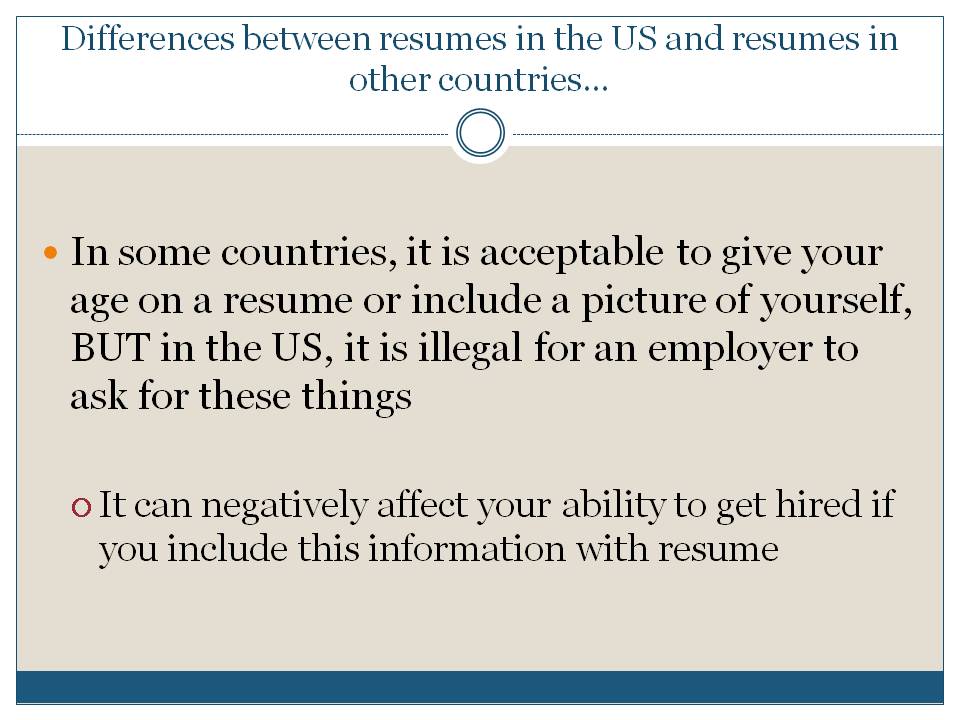
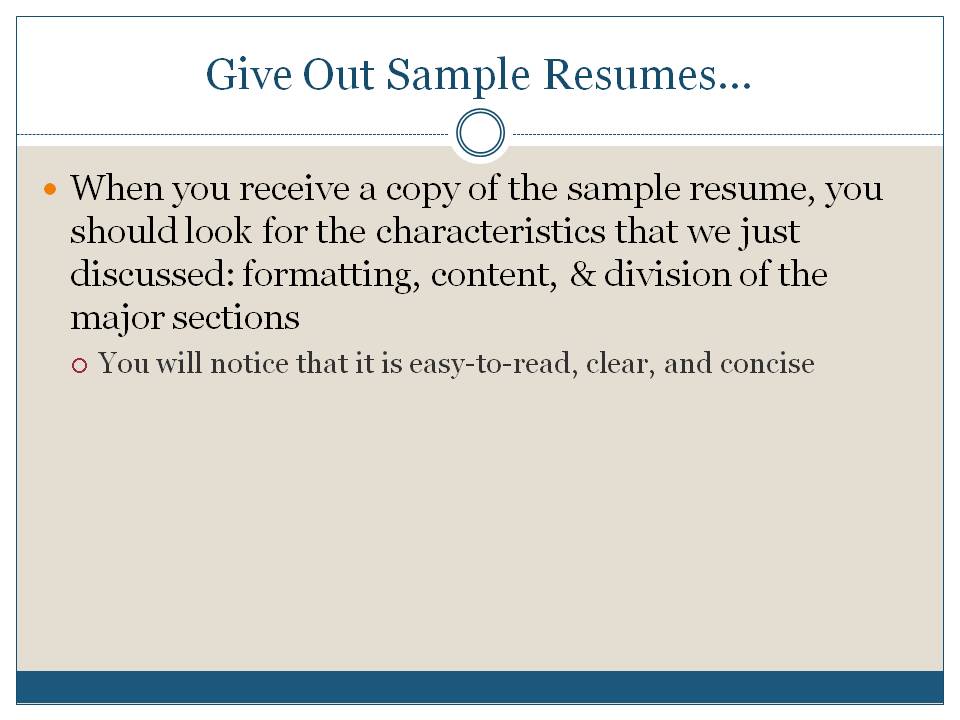
Using what you've learned about resume writing, see if you can spot what's wrong with these sample resumes.





Resume Writing (Kristin Krogh)


Sample Resume:


Use this list of action verbs in your resume and other pieces of business writing:
accommodated                                         accomplished                                achieved
adapted                                                     adjusted                                         administered
analyzed                                                   arranged                                         assembled
assisted                                                    attended                                         awarded
budgeted                                                  built                                                 calculated
coached                                                    collected                                        communicated
compiled                                                  completed                                       composed
computed                                                 conducted                                      converted
coordinated                                            created                                             customized
dealt in                                                      designed                                       determined
developed                                               directed                                            drafted
earned                                                        elected                                           established
estimated                                                 evaluated                                         expanded
expedited                                                 figured                                              fulfilled
guided                                                     handled                                              headed
implemented                                           improved                                         increased
informed                                                 initiated                                            installed
instituted                                               instructed                                            interned
interpreted                                            maintained                                         managed
mapped                                                 monitored                                           motivated
navigated                                             negotiated                                         operated
organized                                             oversaw                                              performed
planned                                                 prepared                                            programmed
provided                                               reappraised                                       received
reconciled                                             reduced                                               re-evaluated
reported                                              researched                                          saved
scheduled                                           searched                                             selected
served                                                   settled                                                sold
solved                                                 supervised                                         taught
tested                                                  tracked                                                trained
translated                                             tutored                                                   updated
upgraded                                            verified                                                weighed
wired                                                    won                                                    worked
wrote